Demand safe streets and remember Nolberto Sanabría Meza who was killed by a high speed police chase.
By registering for this event you agree to follow WABA's Code of Conduct.
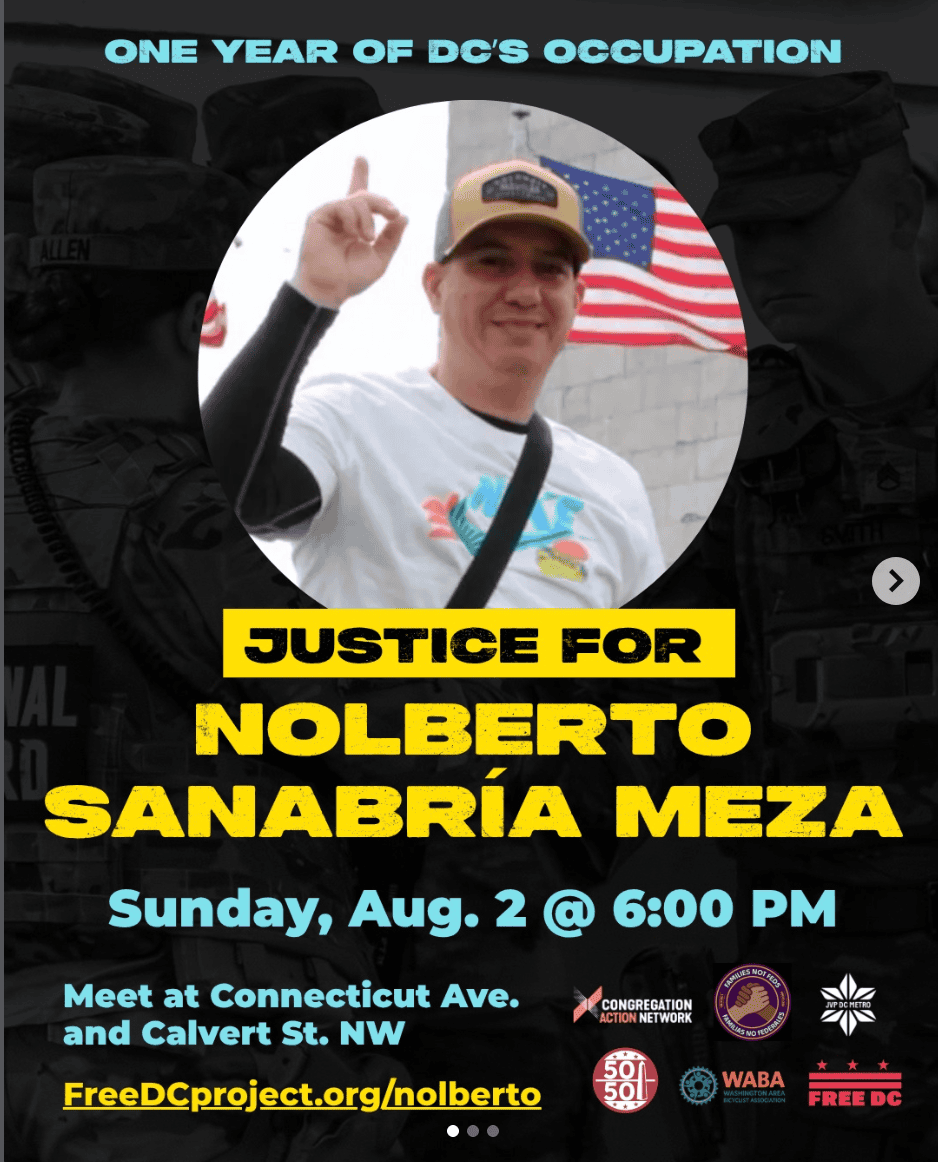
Sunday, August 2, 2026 - 6:00pm
Washington, DC
Hosted by Congregation Action Network, Families Not Feds, Jewish Voice for Peace, 50501 DC, & Free DC
Demand safe streets and remember Nolberto Sanabría Meza who was killed by a high speed police chase.
By registering for this event you agree to follow WABA's Code of Conduct.
WABA works with grassroots advocates at the local, county and state level to support laws and policies that make it easier and safer to walk, bike, and take transit. And we work to changes ones that make biking less safe, make it harder to build bike infrastructure, or that deprioritize the safety and convenience of people walking, biking, or taking transit.
In practice that means advocating for robust and transformative Vision Zero programs, enforceable Complete Streets policies, and funding for new infrastructure that supports biking, walking and transit.
Other regional legislative priorities include:
Done right, Vision Zero is a transformative approach to traffic safety and transportation planning. Developed in Sweden, it is built on two core principles: crashes are preventable, and the only acceptable number of deaths from traffic violence is Zero. It provides a clear framework for decision-making that prioritizes safety for everyone over speed and convenience for drivers.
DC launched a Vision Zero initiative in 2015, with surrounding jurisdictions following suit over the next few years.
While there have been laudable projects launched under the Vision Zero banner across the region, the adoption of Vision Zero programs have not been the transformational shift required to reverse the increase in deadly traffic violence.
WABA's Vision Zero advocacy focuses on using legislation and policy to permanently change they way decisions are made: requiring that transportation planning and engineering put safety over driver convenience in every decision.
WABA fights for a region where biking, walking and transit are the best ways to get around.
We educate policymakers and organize grassroots advocates for to speak up for safer places to bike and walk; and for laws and policies that protect people who are walking and biking, reduce dangerous driving, and facilitate changes to the built environment.