Join Councilmember Evan Glass to discuss improved safety for all road users
By registering for this event you agree to follow WABA's Code of Conduct.
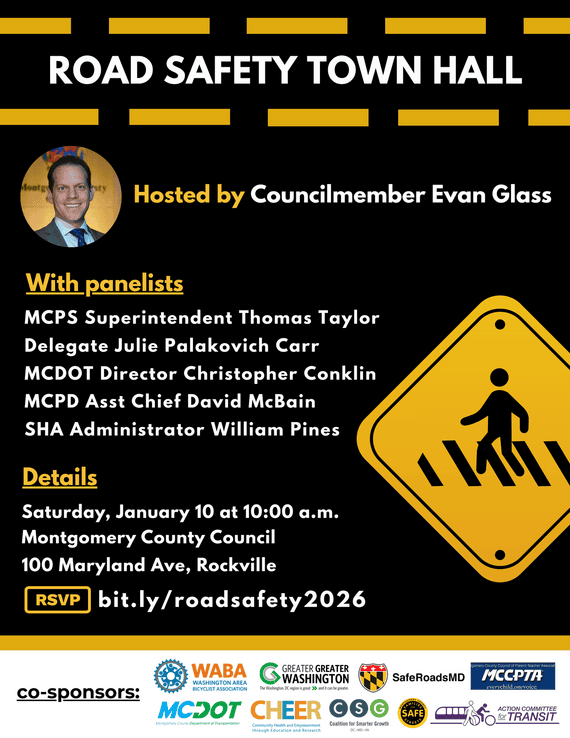
Saturday, January 10, 2026 - 10:00am
Montgomery County Council
Hosted by Councilmember Evan Glass
Join Councilmember Evan Glass to discuss improved safety for all road users
By registering for this event you agree to follow WABA's Code of Conduct.
WABA’s Complete State Roads initiative aims to remake state highways in Montgomery and Prince George’s Counties as complete streets, boosting safety and mobility for people who walk, bike, roll, or use transit as well as for drivers and their passengers.
The Complete State Roads–Montgomery County report is available at waba.org/stateroads and you can watch a presentation delivered about it at WABA’s 4th Great Montgomery County Bike Summit in 2023.
As part of the Complete State Roads initiative, WABA backed the development of legislation for introduction in the 2024 Maryland legislative session.
Montgomery County's budgeting process, both for its annual budget and its 6-year Capital Improvement Program, takes place in the spring. WABA works with grassroots advocates and partner organizations to build support on the County Council for funding individual projects and to ensure that the relevant agencies (usually Parks, Planning, Transportation) have the resources required to grow and maintain the County's active transportation network.
Current priorities include funding the Montgomery County Equitable Bikeways proposal, completion of the Capital Crescent Trail from Bethesda to Silver Spring, and developing an e-bike purchase rebate program.
Montgomery County's piecemeal approach to building bike infrastructure is not aligned with its stated climate, safety, and equity goals,
In 2021, WABA assembled a proposal that prioritized projects in the county's existing (and laudabe!) Bicycle Master Plan within county-designates Equity Focus Areas. You can read the report here. With around $110 million, the County could build all of the Tier 1 bikeway projects in most of the equity emphasis areas in the County. This dollar amount spread over the FY 23-28 six year capital budget period is consistent with current commitments to biking and walking
Complete Streets are streets designed to accommodate all users, and that prioritize historically underinvested modes of transportation like transit, walking, and biking. An incomplete street might lack adequate sidewalks, low-stress bike infrastructure, or safe and comfortable access to transit.
Effective Complete Streets policies change the way a jurisdiction plans and builds transportation infrastructure—sidewalks, low stress bike infrastructure, and transit should be included in any new or rebuilt street by default, rather than as an add-on when there's space or demand.
While most regional jurisdictions have a Complete Streets policy of some sort, they lack teeth and permit transportation departments to continue to build streets that put cars first and squeeze other modes into the margins.
WABA works with grassroots advocates at the local, county and state level to support laws and policies that make it easier and safer to walk, bike, and take transit. And we work to changes ones that make biking less safe, make it harder to build bike infrastructure, or that deprioritize the safety and convenience of people walking, biking, or taking transit.
In practice that means advocating for robust and transformative Vision Zero programs, enforceable Complete Streets policies, and funding for new infrastructure that supports biking, walking and transit.
Other regional legislative priorities include:
Done right, Vision Zero is a transformative approach to traffic safety and transportation planning. Developed in Sweden, it is built on two core principles: crashes are preventable, and the only acceptable number of deaths from traffic violence is Zero. It provides a clear framework for decision-making that prioritizes safety for everyone over speed and convenience for drivers.
DC launched a Vision Zero initiative in 2015, with surrounding jurisdictions following suit over the next few years.
While there have been laudable projects launched under the Vision Zero banner across the region, the adoption of Vision Zero programs have not been the transformational shift required to reverse the increase in deadly traffic violence.
WABA's Vision Zero advocacy focuses on using legislation and policy to permanently change they way decisions are made: requiring that transportation planning and engineering put safety over driver convenience in every decision.
WABA fights for a region where biking, walking and transit are the best ways to get around.
We educate policymakers and organize grassroots advocates for to speak up for safer places to bike and walk; and for laws and policies that protect people who are walking and biking, reduce dangerous driving, and facilitate changes to the built environment.